Evaluation report, UAVScenes key-frame release
The same model fine-tuned twice on the UAVScenes key-frame release, once on all 24,126 hand-labeled camera frames and once with the 1,691 frames that add no view and no per-frame label removed. Same 20 flights, same four scenes, six tasks, 120 trials each. The edited run scored 5.4 points higher.
Success rate by task
The six tasks are the ones UAVScenes is built for. A same-size random cut of 1,691 frames scored 17.9%, inside the full arm's interval, so the gain is from which frames were removed and not from removing frames.
Gain per task
The two tasks that gain most are the two the cut is aimed at. 6-DoF localization is what the 124 stationary holds feed near-duplicate views into, and image segmentation is the task whose labels the 386 copied masks are. Novel view synthesis and LiDAR point cloud segmentation sit flat. The pooled lift clears zero, most single tasks at 120 trials do not, and the chart says so.
What the edited version had removed
Measured on all 20 flights of the key-frame release, every one of the 24,126 hand-labeled camera frames, no sampling. The RTK stream runs at 5 Hz beside the 2 Hz camera and gives 68,910 positions, so every labeled frame has a ground speed under it. 1,305 frames, 5.4% of the release, were shot inside one of 124 stretches of 3 seconds or longer where the drone stayed under 0.1 m per second, 18.6 minutes of held position inside 3.49 hours of flight, and the longest single hold runs 34.0 seconds and carries 68 labeled frames. A further 386 frames were removed for carrying a semantic mask byte identical to another frame's, 292 of them out of a single group of 293 frames that all ship the same 9,301 byte mask against a 29,142 byte median, so that label is a constant rather than a measurement of the frame in front of it. The two rules never fire on the same frame. Two checks say the holds are real hovering and not a dead sensor, no repeated GNSS fix anywhere in the release lasts longer than a single 0.2 second step, though a repeat does happen on 1,744 of the 6,691 rows in HKisland_GNSS_Evening, and the encoded JPEG size moves by a median of 0.137% between consecutive held frames against 0.482% while flying. What stays is everything a model can still learn from, the 996 frames inside pauses shorter than 3 seconds, one representative of each repeated mask, and every frame either side of the 37.4 second camera dropout in HKisland_GNSS03, because a dropout takes away nothing that was recorded.
| Removed | frames | share of the release |
|---|---|---|
| Shot inside a hold of 3 s or longer | 1,305 | 5.4% |
| Semantic mask byte identical to another frame's | 386 | 1.6% |
| Removed | 1,691 | 7.0% |
| Kept | 22,435 | 93.0% |
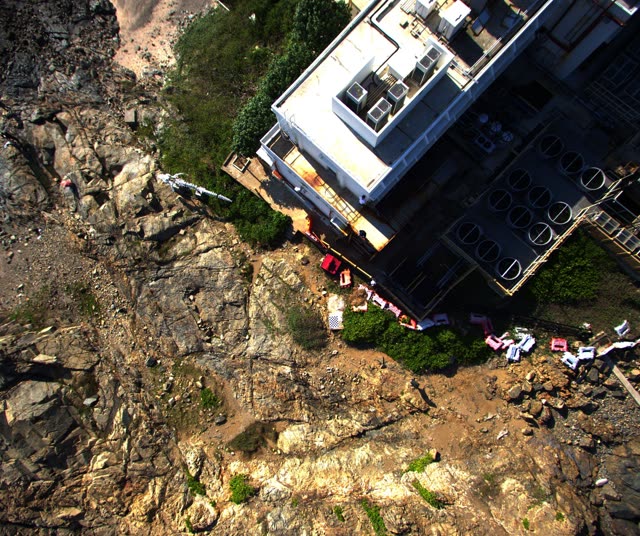
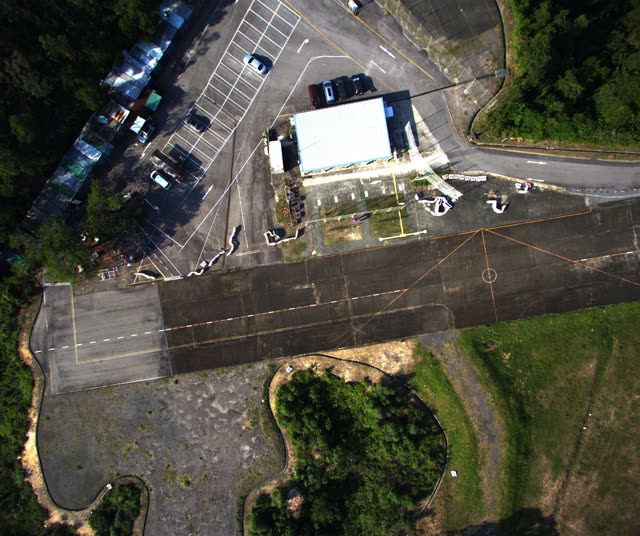
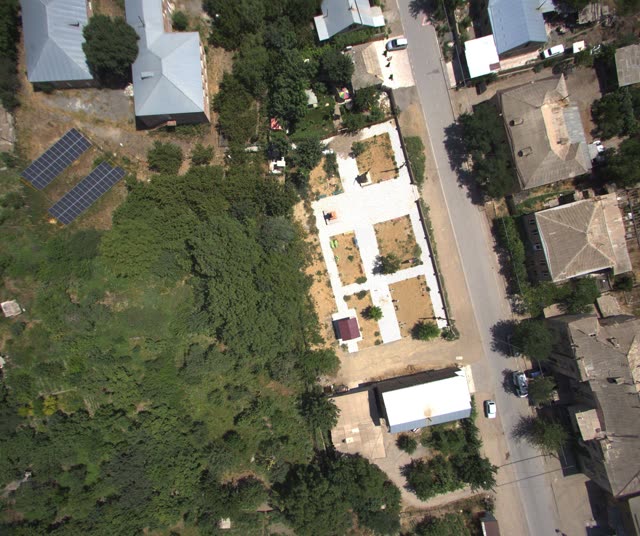
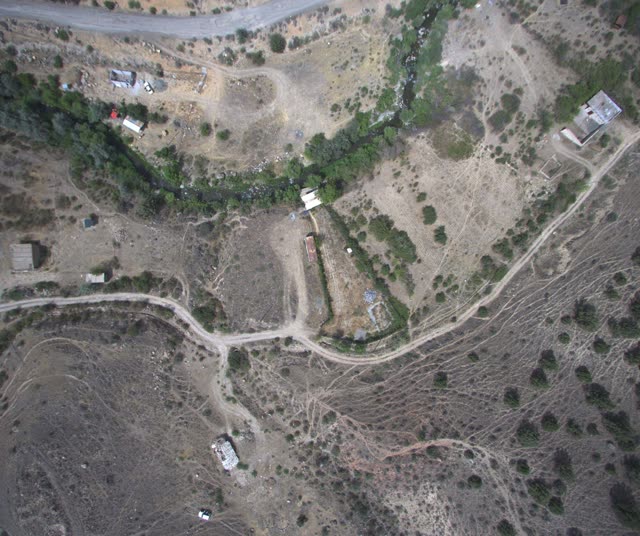
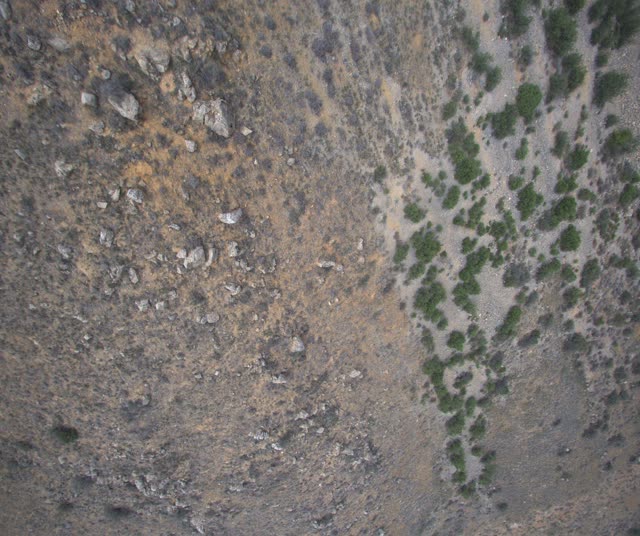
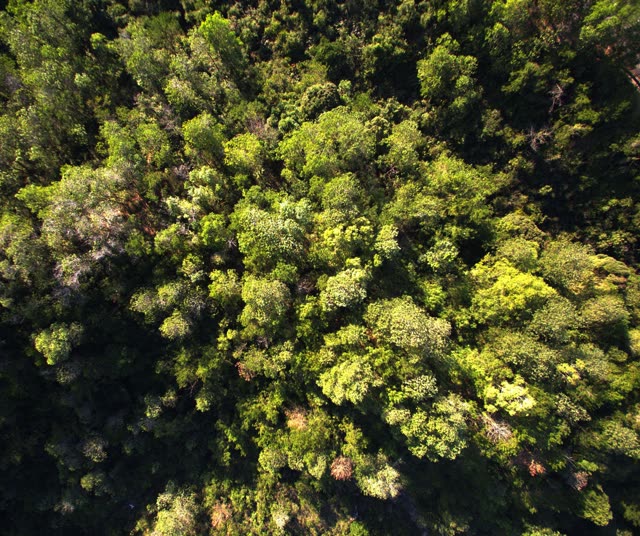
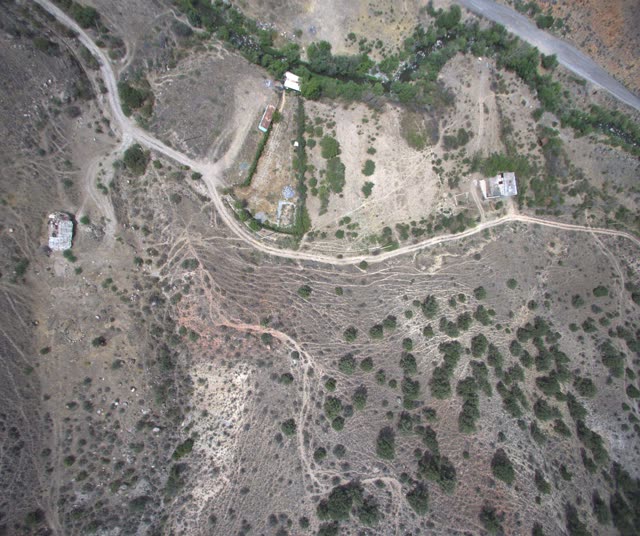
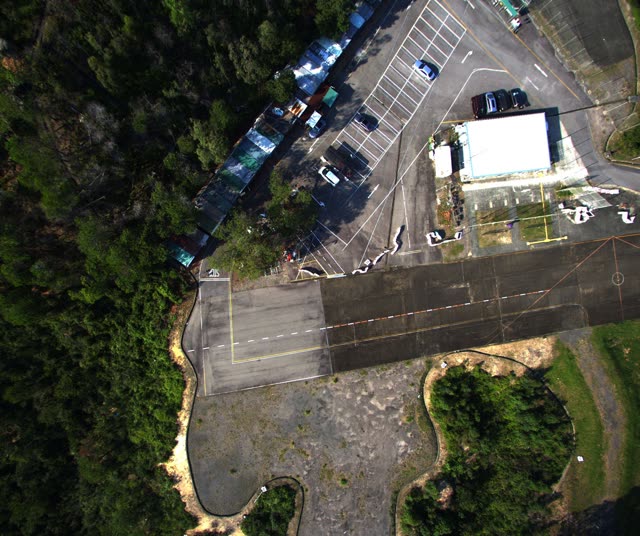
The removed media
Measured on the release. Each still is one hand-labeled camera frame pulled straight out of interval5_CAM_LIDAR.zip by byte range, no full download of a 28.7 GB archive. For a held frame the number is how long the drone stayed under 0.1 m per second around it and how far it actually travelled in that window. For a copied mask the number is how many other frames in the release ship the identical mask file.